Bottom line
The Pixel 11 lineup is not a ladder that every buyer should climb. All four phones use Tensor G6 and Titan M3, launch with Android 17, promise seven years of OS, security, and Pixel Drop updates, and support up to 25W Qi2.2 wireless charging. Display shape, cameras, memory, battery, and price should make the decision.
- Pixel 11 is the complete-value choice for most buyers, with 5x optical zoom, 256GB base storage, and 12GB of RAM.
- Pixel 11 Pro is for someone who wants the full Pro camera system in a compact body.
- Pixel 11 Pro XL uses the same cameras as Pro; its extra value is the larger screen, battery, and faster stated wired charging.
- Pixel 11 Pro Fold makes sense when the 8-inch inner display changes how you read, multitask, or create. It is not the lineup’s camera or endurance leader.
AP and Axios report U.S. starting prices of $899, $1,099, $1,299, and $1,899, respectively—$100 more than the corresponding previous-generation devices. Those are starting prices before tax, trade-in, carrier incentives, or regional promotions.
The four phones in one table
| Field | Pixel 11 | Pixel 11 Pro | Pixel 11 Pro XL | Pixel 11 Pro Fold |
|---|---|---|---|---|
| U.S. starting price | $899 | $1,099 | $1,299 | $1,899 |
| Display | 6.3 in, 60–120Hz | 6.3 in LTPO, 1–120Hz | 6.8 in LTPO, 1–120Hz | 6.5 in outer + 8 in inner, both 1–120Hz |
| RAM and storage | 12GB; 256/512GB | 12GB at 256GB; 16GB at 512GB/1TB | Same as Pro | 16GB; 256GB/512GB/1TB |
| Typical battery | 4,985mAh | 4,850mAh | 5,115mAh | 4,806mAh |
| Google-stated wired charge at about 30 minutes | 55% | 55% | 75% | 50% |
| Rear cameras | 48MP wide + 13MP ultrawide + 10.8MP 5x; up to 30x | 50MP wide + 48MP ultrawide + 48MP 5x; up to 120x | Same as Pro | 48MP wide + 10.5MP ultrawide + 10.8MP 5x; up to 30x |
| HiLight | No | Yes | Yes | Yes |
| Weight | 197g | 204g | 226g | 239g |
The hardware fields come from Google’s official Pixel 11, Pixel 11 Pro/Pro XL, and Pixel 11 Pro Fold specification pages. Battery life, charging percentages, peak brightness, and durability language reflect Google’s tests and descriptions, not independent results.
What is meaningfully new
The standard phone is no longer a token entry model. Pixel 11 has a triple-camera system with 5x optical telephoto and up to 30x Super Zoom, while base storage moves to 256GB. Buyers who do not need the larger Pro sensors or 120x zoom can keep the complete focal-length range without paying for the badge.
Pro and Pro XL share the same 50MP wide, 48MP autofocus ultrawide, and 48MP 5x telephoto cameras, plus the same 42MP front camera. Both list Instant Night Sight, 8K recording through Video Boost, and up to 120x Pro Zoom. A 120x ceiling describes a feature range; it does not guarantee equal image quality at every step.
HiLight is available on Pro, Pro XL, and Fold. The light array around the camera area can indicate a favorite contact or Gemini status while the phone is face down. It is a useful glance-reduction interaction, not a sufficient reason to replace a working phone.
Magic Capture, Camera Looks, Gemini Intelligence, Gemini Nano, Gemini Live, and Gemini Apps span the series. Google says Tensor G6 can deliver up to 20% better power efficiency, 25% faster browsing, and 15% faster app loading than G5, according to Axios. These are vendor claims at launch; sustained performance, heat, network behavior, and battery life remain to be independently tested.
If AI is driving the purchase, run the exact feature through the four-gate AI phone buying method—availability, execution path, privacy/control, and cost. For cross-app actions, use the Android phone-agent permission and confirmation checklist. “Supports Gemini” is not proof that every feature works for every account, language, or region.
Choose by use case, not price order
Pixel 11: full camera range without Pro-camera pricing
Pixel 11 fits buyers who want wide, ultrawide, and 5x telephoto cameras but do not need LTPO, HiLight, the 42MP front camera, or the Pro video set. Its 4,985mAh battery is even larger on paper than the compact Pro’s 4,850mAh cell, but capacity alone cannot determine real endurance across different displays, radios, thermal behavior, and workloads.
Pixel 11 Pro: compact body, complete Pro cameras
The Pro proposition is precise: the 6.3-inch body gets the same camera system as Pro XL. The $200 premium over Pixel 11 should buy the camera hardware, 1–120Hz LTPO display, and HiLight you specifically want—not a belief that every experience will automatically be faster.
Pixel 11 Pro XL: screen, battery, and faster stated charging
The 6.8-inch screen, 5,115mAh battery, and Google’s claim of reaching 75% in about 30 minutes are the main reasons to choose Pro XL. Its cameras match Pro. If the large display is unnecessary, the extra $200 and 22g need more justification than the XL label.
Pixel 11 Pro Fold: buy the 8-inch canvas, accept the tradeoffs
Fold measures 10.1mm closed and 5mm open, weighs 239g, and combines a 6.5-inch outer display with an 8-inch inner panel. It is best for frequent split-screen work, long-form reading, spreadsheets, presentations, or fold-aware shooting modes.
The tradeoffs are equally explicit. Its 4,806mAh battery is the smallest in the series, Google gives it a 24+ hour rather than 30+ hour battery claim, and its rear-camera specification is closer to Pixel 11 than the Pro pair. The $1,899 purchase is fundamentally about form factor, not the highest specification in every category.
Should a Pixel 10 owner upgrade?
Do not upgrade on Tensor G6 percentages alone. Launch-day evidence does not settle sustained performance and heat, 5G endurance, night and telephoto consistency, or charging temperatures.
If Pixel 10 already solves the job, wait for reviews that hold network, brightness, and camera conditions constant. An upgrade is easier to justify only when one of these changes fixes a real constraint: the 30x standard-camera range, Pro camera hardware and HiLight, Pro XL’s faster stated charge, Fold’s thinner and lighter geometry, or 256GB base storage.
A launch presentation confirms direction, not two-year durability or daily reliability. The same reserve-versus-wait discipline used for other AI phone launches applies here.
Import checklist for unsupported sales regions
Google’s device-availability page had not added Pixel 11 by August 13, 2026, and its current Pixel sales list does not cover every country. Google’s Pixel repair page also limits mail-in and walk-in routes by location. A retailer’s ability to ship a phone is not proof of official local sales, warranty, or repair support.
Before paying, verify six fields:
- Exact model and bands: match the device variant to carrier 4G/5G, VoLTE/VoWiFi, and roaming needs.
- SIM and activation: all four phones list nano-SIM + eSIM dual-SIM, but carrier support for the imported variant remains separate.
- Warranty and repair: identify the service country, shipping cost, customs, turnaround time, and data-handling process.
- Account, language, and AI: check the Google-account region, device language, physical location, and the exact Gemini or Pixel feature.
- Delivered cost: include tax, cross-border shipping, exchange rate, returns, and a charger—not only the phone price.
- Evidence window: if the seller cannot document variant, warranty, and returns, wait for inventory and user reports instead of letting a preorder bonus replace missing information.
Evidence still missing
The official specifications, U.S. starting prices, and launch feature boundaries are known. One day after launch, they cannot answer which phone lasts longest, whether Tensor G6 sustains its gains, how useful 120x zoom is, how Fold handles drops, or how often Magic Capture succeeds in complex scenes.
The sensible default is to start with Pixel 11, choose Pro for compact flagship cameras, choose Pro XL for the large screen and faster charge, and choose Fold only when the form factor changes a real workflow. For anyone without an urgent need, independent reviews are more valuable than a launch promotion.
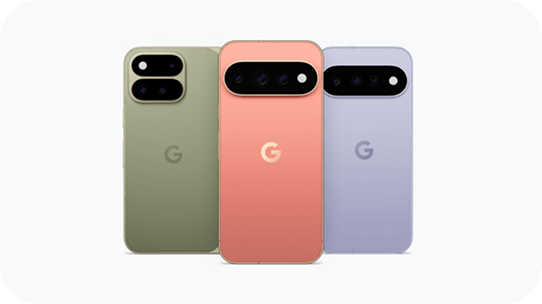
Image and source notes
The cover comes from Google’s official Pixel 11 page on the Google Store. It uses the official image unchanged, with attribution, and no media artwork, leaked imagery, or generative edit. Hardware comes from Google’s three specification pages; Tensor G6 figures retain Google attribution; AP and Axios cross-check U.S. launch prices and announced features. Because Google’s regional page had not yet added Pixel 11, it is used only for current sales and service boundaries—not as a prediction of future market plans.