Bottom line
The July 1, 2026 Google Ads Terms update is not just about whether AI can write ad copy. The more practical shift is that advertiser inputs, provided URLs, authorized site crawling, generated ad assets, and landing-page selection now sit inside a clearer automation framework.
This is not legal advice. For most advertisers, the right response is an audit sheet: what did you give Google, what can the system generate, which queries can expand, which pages can be selected by Final URL Expansion, and which disclaimers, exclusions, and brand rules must stay in place.
AI may improve reach. It does not remove review responsibility.
What changed
Google Ads Help says the updated Google Ads Terms of Service became effective on July 1, 2026. Google also says the change affects Google Ads, not Google Workspace, Cloud Identity, or other Google products.
Three parts matter most for operators:
| Change | What it means for advertisers |
|---|---|
| Inputs can be used across Google Ads features | Information entered into conversational experiences and similar tools may feed campaign setup and performance systems |
| Authorized URLs or accounts can be crawled | Website content you authorize Google to access may support automated campaign setup |
| Generated assets still need review | Google says advertisers must continue reviewing, approving, editing, or removing campaigns and ad assets generated automatically |
Search Engine Land’s coverage focuses on the same operational point: automation is expanding, while advertiser accountability remains.
Why now
The Terms update is not happening in isolation. Google Ads is also pushing more Search advertising into AI Max.
In April, Google said AI Max for Search campaigns was moving out of beta and that Dynamic Search Ads, Automatically Created Assets, and campaign-level broad match were on upgrade paths. Google later extended the DSA sunset and auto-upgrade timeline to begin in February 2027, while ACA and campaign-level broad match upgrades still begin in September 2026.
The product direction is clear: search term matching, text customization, Final URL Expansion, brand and location controls, text guidelines, AI Brief, and required text disclaimers are becoming part of the AI-assisted ad workflow.
The Terms and product updates answer the same question: when the ad system reads inputs, understands pages, generates assets, and chooses destinations, who sets the boundaries and who checks the result?
Google’s answer is: the system can automate more, but advertisers still manage inputs and outcomes.
Who should pay attention
If you only run a small branded campaign, the immediate impact may be limited. But these accounts should review settings now:
| Account type | What to check |
|---|---|
| Performance Max users | Generated assets, landing-page expansion, asset groups, and conversion goals |
| Search campaign users | Broad match, AI Max, query expansion, and negative keywords |
| Dynamic Search Ads users | Migration path to AI Max and URL controls |
| Ecommerce and DTC sites | Merchant Center feeds, product pages, promotional claims, and pricing language |
| Regulated industries | Required disclaimers, prohibited claims, regional limits, and approval workflow |
| Agencies | Client authorization, rights to inputs, review records, and responsibility boundaries |
The most common risk is not a single strange AI-written headline. It is an unexpected combination of page, product, query, claim, and disclaimer.
Separate facts, concerns, and inference
The confirmed facts are straightforward: the new Google Ads Terms are effective; Google’s own help page discusses inputs, authorized URLs, automated campaign setup, and generated assets; Google also emphasizes advertiser responsibility for input rights and review.
The concern is also real: some advertisers and paid-search analysts worry that automation reduces visibility and control. That is a reasonable concern, but it is not the same as a confirmed Google objective.
My inference is that Google Ads work is moving from “write every ad and keyword manually” toward “set boundaries for AI, inspect examples, review output, and fix inputs.” For mature teams, that is leverage. For small teams without process, it is risk amplification.
Use an audit matrix
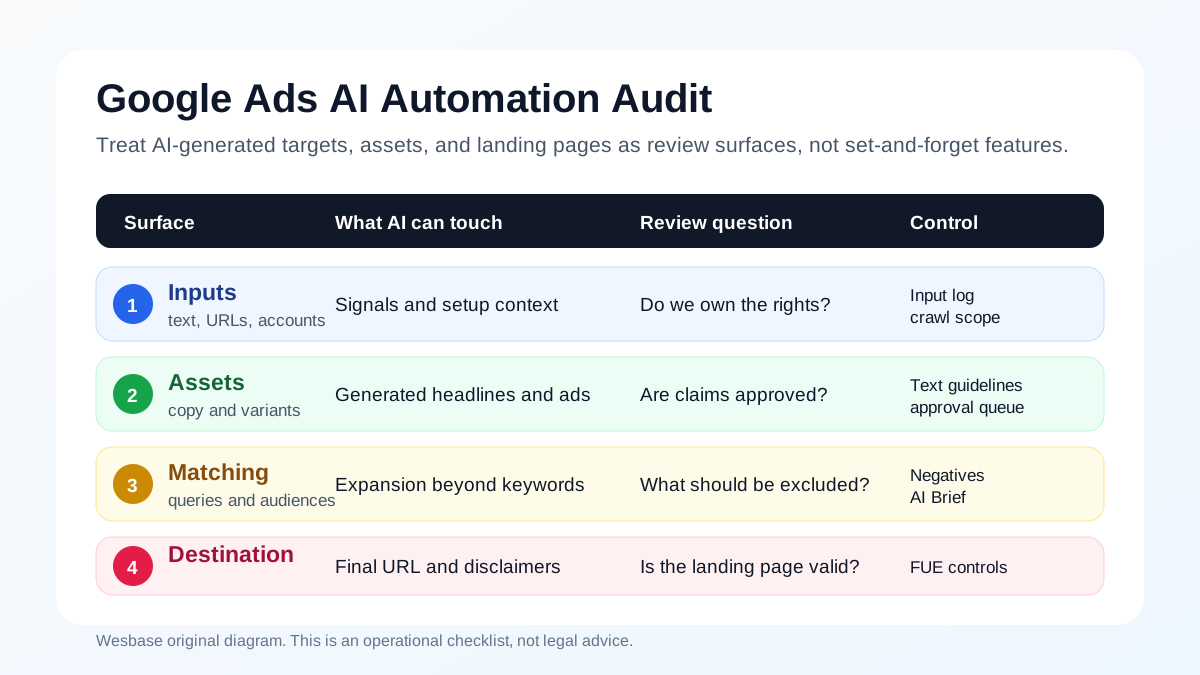
Break Google Ads AI automation into four surfaces:
| Surface | What AI can touch | Review question | Control |
|---|---|---|---|
| Inputs | Copy, URLs, accounts, page content | Do we have rights to use this in ads? | Input log, source tracking, crawl scope |
| Assets | Headlines, descriptions, combinations, generated assets | Are claims, prices, and brand language approved? | Text guidelines, human approval, exclusions |
| Matching | Queries, audiences, intent expansion | Which searches should never trigger? | Negative keywords, brand controls, AI Brief |
| Destination | Pages selected by Final URL Expansion | Is the landing page correct, compliant, and useful? | URL exclusions, disclaimers, page review |
This is more useful than debating whether to “use AI.” Many teams will keep using automation. The real question is where automation happens and who owns review.
What to audit today
First, list every campaign using Performance Max, Automatically Created Assets, Final URL Expansion, broad match, or AI Max.
Second, document the inputs those campaigns rely on: website URLs, feeds, product data, landing pages, business descriptions entered into conversational tools, old assets, and customer-supplied materials.
Third, check whether you have the rights to use those inputs in advertising. Agencies should make client authorization explicit.
Fourth, sample generated headlines, descriptions, and assets. Look for pricing claims, performance claims, finance/medical/legal wording, competitor names, and brand voice drift.
Fifth, review search terms and expanded matching. Add negatives or other controls where the system reaches intent you do not want.
Sixth, inspect possible Final URL Expansion destinations. Not every indexable page is a good ad landing page.
Seventh, if you operate in a regulated industry, verify that required disclaimers survive text customization and URL expansion. Google has discussed text disclaimers in AI Max updates, but your account still needs validation.
Eighth, set a weekly or biweekly review rhythm. Automation risk is not a one-time setup issue. It changes as systems learn and campaigns evolve.
What remains uncertain
Regional terms can differ. Billing country, payment method, target markets, and local law may change the arbitration, fee, and liability language that applies to your account.
AI Max timelines and feature availability are also moving. Google has already adjusted the DSA timeline, and more changes are possible.
Finally, turning a specific feature on or off does not answer every responsibility question. Campaign settings can restrict specific automation behavior, but the Terms are an account-level framework.
The safest approach is evidence-based: list the real features enabled in your account, then review them one by one.
FAQ
Are the new Google Ads Terms and AI Max the same thing?
No. The Terms are a platform and legal framework. AI Max is a product capability. But both point in the same direction: more automation across copy, matching, websites, and landing-page selection.
Should I turn off all automation immediately?
Usually no. Start by auditing scope. For high-compliance or high-brand-risk campaigns, reduce automation first, then test carefully.
What if my team is small?
Do three things at minimum: review generated assets weekly, review search terms weekly, and review landing pages plus negative keywords monthly. Do not treat Google Ads as a fully unattended system.
Does this affect SEO?
Indirectly, yes. AI Max and Final URL Expansion depend more on site content, page structure, and product information. If your site is messy, the ad system has worse material to work with. Paid search and SEO increasingly share the same content-quality foundation.
Is this legal advice?
No. This is an operational interpretation based on public Google documents and industry coverage. For contract responsibility, regional terms, agency authorization, or regulated advertising, consult legal or compliance counsel.