What did Meta actually withdraw?
Meta announced Muse Image on July 7, including a workflow where a user could tag an Instagram username and ask Meta AI to use public photos as references for a new visual. Within days, Meta removed the disputed feature after privacy and likeness concerns, saying the feature had “missed the mark.”
The careful conclusion is not that Meta cancelled AI image generation. It is that turning public content into an input for someone else’s generative workflow crossed an expectation boundary. The feature is gone, but the distinction between public visibility, AI reference, training, and likeness use remains.
Confirmed facts, inference, and unknowns
Confirmed
- Meta announced Muse Image and described username tagging as a way to use public photos in a generated visual.
- The launch covered Meta AI and selected Instagram Stories and WhatsApp surfaces, with rollout varying by market.
- AP reported that Meta removed the disputed feature and quoted the company saying it was no longer available.
- TechCrunch separately reported the rollback after backlash over the Instagram experience.
Reasonable inference
The product problem was a consent and expectation mismatch. People may publish a photo so others can view, like, or share it. That does not automatically mean they consent to strangers using it as a generation reference for a new portrait or style imitation.
Still unknown
- How long previously referenced photos, outputs, or logs are retained.
- Whether the rollback covers every market, Meta AI entry point, and Muse Image capability.
- Whether Meta will replace the feature with explicit opt-in controls.
- How the feature related to training, recommendations, and copyright review.
“The feature was removed” should not be rewritten as “all historical data was deleted.” The public evidence does not support that stronger claim.
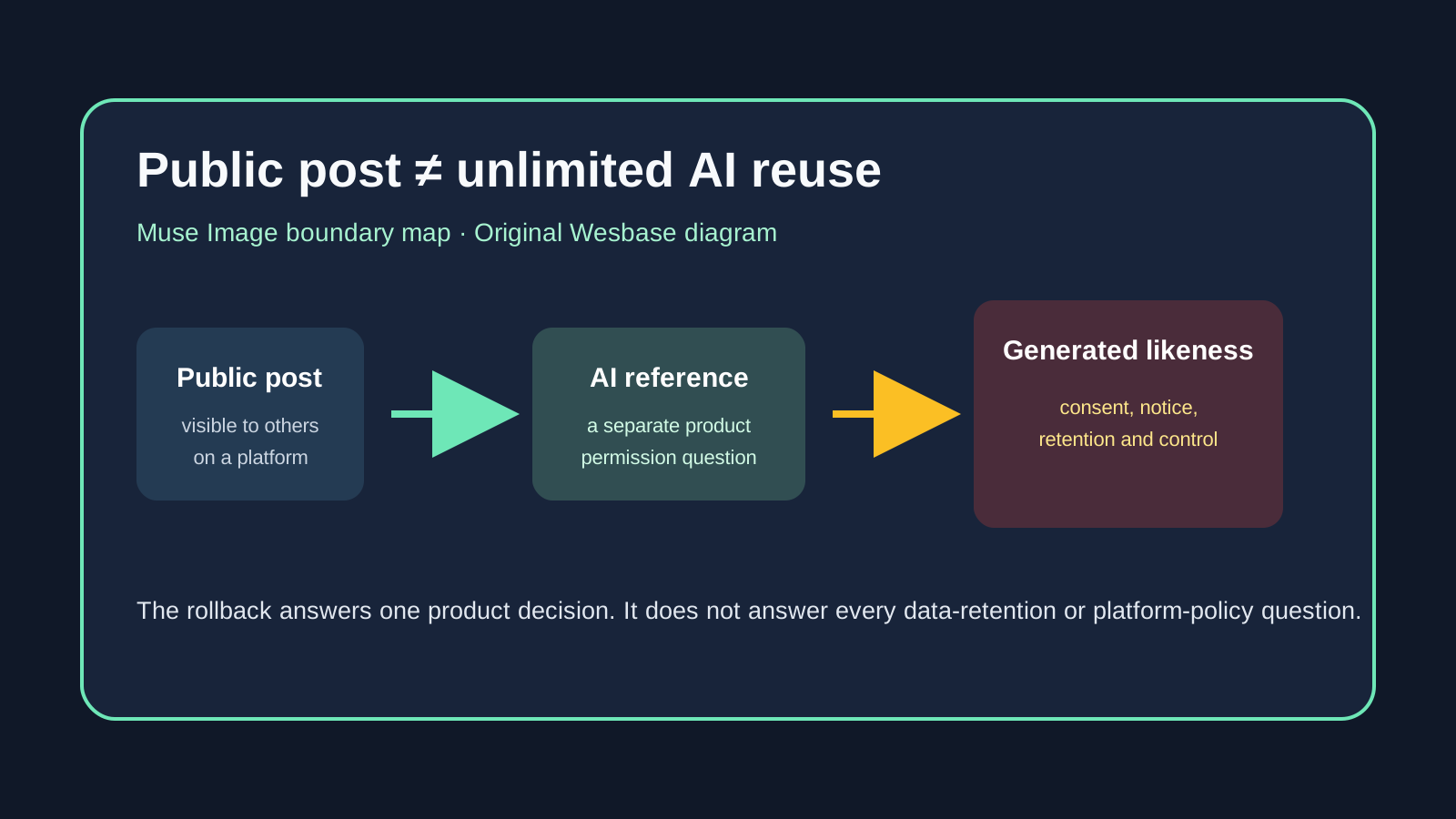
Public, reference, training, and likeness are different layers
| Layer | Question | What to check |
|---|---|---|
| Public visibility | Can other people see the post? | Account and post visibility |
| AI reference | Can an AI system use it as a generation input? | Separate notice, opt-in, and withdrawal controls |
| Model training | Is it used to improve a model? | Terms, regional rules, and data controls |
| Generated likeness | Can a new image resemble the person? | Notice, consent, abuse reporting, and appeals |
| Commercial reuse | Can it support an ad or product? | Explicit permission and brand review |
This separation avoids two bad assumptions: that public content has no protections, or that one rollback resolves every AI data question on a platform.
What should different users do now?
| Situation | Practical move | Why it matters |
|---|---|---|
| Everyday Instagram user | Review account visibility and save important originals | Product defaults can change faster than expectations |
| Photographer or designer | Manage public display separately from AI reuse permission | Visibility is not a license to imitate style or likeness |
| Brand or small business | Keep employee and customer images out of default AI workflows | Likeness, commercial, and privacy approvals may be required |
| Product team | Make AI reference a distinct permission layer | Users need understandable consent, not merely technical availability |
If you used the feature, preserve the relevant dates and outputs, then look for deletion, feedback, or appeal controls. Do not upload someone else’s photo just to test whether the product still works; that repeats the disputed behavior.
Why this matters beyond Muse Image
For consumers, the risk is not only whether a model can make a realistic image. It is whether a platform silently upgrades “other people can see this” into “other people can call this as an input.” Without a clear confirmation step, users cannot tell what they agreed to.
For product teams, Muse Image creates a practical launch checklist: What is the default? Does the referenced person know? Can they refuse? Does refusal affect public visibility? Are outputs labeled? Can historical data be deleted? Those questions may determine whether an AI feature survives more than the quality of its demo.
FAQ
Did Meta cancel Muse Image entirely?
The public evidence supports the narrower claim that Meta removed the disputed public-profile reference feature. It does not show that every Muse Image generation capability was cancelled.
Does a public photo automatically permit AI reuse?
No blanket conclusion is safe. Public visibility, AI reference, training, likeness generation, and commercial reuse are separate layers with different product and policy questions.
Should everyone make their account private?
That is a trade-off. Creators may lose discoverability, while people posting children, client work, or unreleased projects may reasonably prefer a smaller audience. Reducing visibility can be more controllable than waiting for a platform explanation.
Image and source note
The cover is an original Wesbase diagram and uses no Meta, Instagram, or user imagery. Sources include Meta’s Muse Image announcement, Meta AI’s technical post, AP’s report on the rollback, and TechCrunch’s independent coverage. This is not legal advice; claims about consent mismatch, retention, and future product direction are labeled as inference or unknown where appropriate.