先说结论:这是工作负载路由,不是模型排名
本文比较的是通过 Gemini API 使用的 gemini-3.6-flash 和 gemini-3.5-flash-lite。截至 2026-07-24,两者在 Gemini API model catalog 中都是 Stable;Google 的最新模型文档也将它们描述为 GA、可用于生产。两者都在 2026-07-21 发布,但 Stable 是当前状态,不是行为永远不变的承诺。
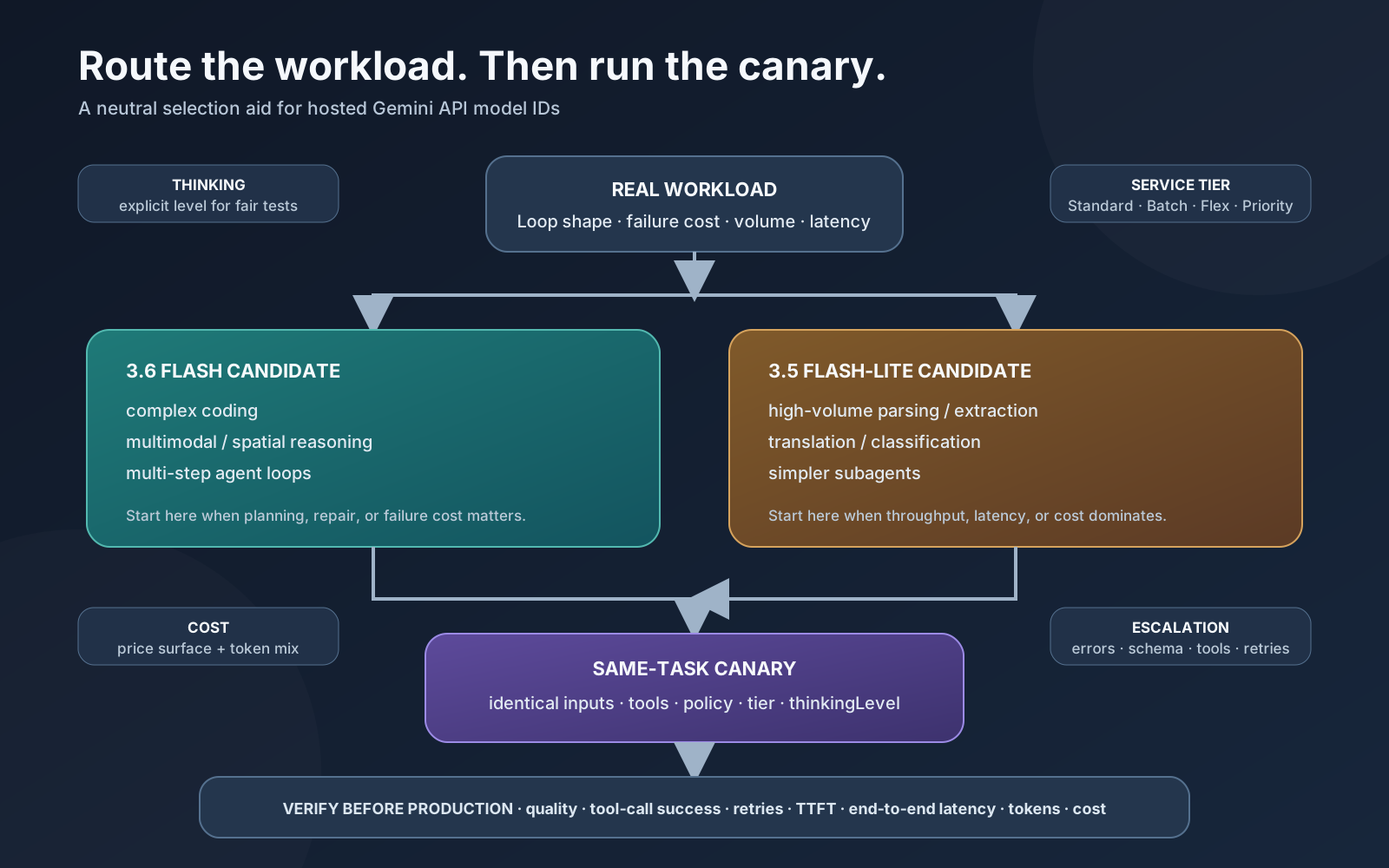
我的初始路由假设很简单:复杂 coding、多模态/空间推理和多步 agent loop,先把 3.6 Flash 放进 canary;高吞吐、低延迟、低成本的解析、翻译、分类、结构化抽取和简单子代理,先把 3.5 Flash-Lite 放进 canary。这是基于 Google 产品定位的编辑推断,不是独立测试结论,也不是“3.6 永远更好”。
如果你只想知道该选哪个,先选一个真实任务,然后同时测试两个 exact model ID。真正的 next action 是记录质量和运维数据,而不是把榜单分数直接当成生产可靠性。
一张能力与控制面矩阵
下面的 documented capability 都限定在 Gemini API model pages。页面列出什么,不等于每个下游产品、企业入口或你的工具链都能成功使用它。
| 维度 | gemini-3.6-flash | gemini-3.5-flash-lite | 选择时怎么读 |
|---|---|---|---|
| 状态 | Stable;Google 文档称 GA | Stable;Google 文档称 GA | 当前状态,需持续维护 |
| 发布日期 | 2026-07-21 | 2026-07-21 | 与本文 source date 2026-07-24 分开 |
| API 输入/输出 | text、image、video、audio、PDF input;text output | text、image、video、audio、PDF input;text output | PDF 是 Gemini API model-page 范围 |
| 上下文/输出上限 | 1,048,576 input tokens / 65,536 output tokens | 1,048,576 input tokens / 65,536 output tokens | 上限不代表每次请求都有相同延迟 |
| Thinking | 支持 minimal、low、medium、high;默认 medium | 支持 minimal、low、medium、high;默认 minimal | minimal 不是 guaranteed thinking-off |
| API 页面列出的工具 | caching、code execution、computer use (Preview)、file search、function calling、Google Maps grounding、Search grounding、structured outputs、thinking、URL context | 同上 | listed support 不证明 downstream workflow 成功 |
| 消费选项 | Batch、Flex、Priority,以及 Standard 价格面 | Batch、Flex、Priority,以及 Standard 价格面 | service tier 会改变等待与成本 |
| Google 的产品定位 | coding、knowledge work、多模态表现、agentic execution、空间推理、复杂 coding cycle 的快速 agentic loop | high-throughput、low-latency、low-cost execution;解析、翻译/分类、结构化抽取和简单数据处理 | 这是 vendor statement,不是工作流保证 |
Google 的 model card 给出了一组有用但有限的对照:在它定义的任务和 harness 下,3.6 Flash 对 3.5 Flash 的 DeepSWE 是 49% vs 37%,MLE-Bench 是 63.9% vs 49.7%,OSWorld-Verified 是 83.0% vs 78.4%,GDPval-AA v2 是 1421 vs 1349,GDM-MRCR v2(128k average)是 91.8% vs 77.3%。这些是 Google 的 model-card benchmark results as of July 2026,不是你的应用可靠性或 SLA。
Lite model card 还报告了 3.5 Flash-Lite 对 3.1 Flash-Lite 的 SWE-Bench Pro 54.2% vs 38.3%、Terminal-Bench 2.1 54.0% vs 31.0%、OSWorld-Verified 74.0% vs 54.3%,以及 GDM-MRCR v2(128k average)72.2% vs 60.1%。这不是 3.6 Flash vs Lite 的直接比较,所以只把它当作 Lite 相对上一代 Lite 的背景,不让它替代同任务 canary。
Google 的发布文还称,3.6 Flash 在 Artificial Analysis Index 上比 3.5 Flash 少使用 17% 的 output tokens,并在多步工作流中使用更少的 reasoning steps/tool calls。这个说法应归因于 Google 和该 named external index,不能推成所有任务都会降本。
如果你的评估对象是能读文件、调用工具、修改代码或推进 agent loop 的真实工作,建议同时参考工作代理评估清单:权限、复核和真实任务测试。模型分数只能缩小候选范围,不能替你验证动作是否安全、结果是否可复核。
价格与服务层:先把 $7.50 和 $9.00 分清
以下是 Gemini Developer API paid-tier 的价格,单位均为每 1M tokens。输入和输出必须保留模型名;output price 包含 thinking tokens。
| Gemini Developer API paid-tier | gemini-3.6-flash input / output | gemini-3.5-flash-lite input / output | 服务含义 |
|---|---|---|---|
| Standard | $1.50 / $7.50 | $0.30 / $2.50 | 同步,full price |
| Batch | $0.75 / $3.75 | $0.15 / $1.25 | 异步,50% of Standard;target turnaround up to 24 hours |
| Flex | $0.75 / $3.75 | $0.15 / $1.25 | 同步,50% of Standard;best-effort/sheddable,target 1–15 minutes |
| Priority | $2.70 / $13.50 | $0.54 / $4.50 | 低延迟、non-sheddable;比 Standard 高 75–100% |
价格纠错
gemini-3.6-flash 的 Standard output 是 $7.50/1M。当前价格表相邻的 $9.00/1M 是 gemini-3.5-flash,不是 gemini-3.6-flash,也不是 gemini-3.5-flash-lite。Lite 的 Standard output 是 $2.50/1M。3.6 model card 的价格行也把 3.6 Flash 写成 $7.50、3.5 Flash 写成 $9.00,说明这个差异是邻近模型行混淆,而不是目标模型价格冲突。
Batch 便宜,但它是 asynchronous,不是更快的 interactive route。Flex 是 synchronous,却是 best-effort/sheddable;Priority 是 service-tier choice,不是另一种模型。上述 timing 是 Gemini API optimization documentation 的 service-tier characteristics,不是每个账号、地区、输入大小或并发设置下的 speed benchmark,也不是 SLA。
此外,Google Cloud Agent Platform 有独立 pricing surface。其 Flex/Batch 表列出 3.6 Flash 为 $0.75 input / $3.75 output、3.5 Flash-Lite 为 $0.15 input / $1.25 output,并带有 endpoint 和 long-context 规则。不要把 Agent Platform 数字和 Gemini Developer API Standard/Priority 合并比较。
路由树:先看循环形状、失败代价和吞吐
下面是编辑推断的起始树,不是最终答案:
真实工作负载
├─ 复杂 coding、空间/多模态推理、需要多轮工具和修正?
│  └─ 先测 gemini-3.6-flash
├─ 高吞吐解析、翻译/分类、结构化抽取、简单子代理?
│  └─ 先测 gemini-3.5-flash-lite
└─ 不能明确归类?
   └─ 两个模型跑相同 bounded canary
          ↓
   same-task canary → 通过质量、工具、重试、延迟、token、成本门槛 → primary/fallback
gemini-3.6-flash 适合 / 不适合
适合作为候选: 复杂 coding cycle、需要多步骤计划和工具调用的 agent loop、图像/视频/音频/PDF 参与的多模态任务、空间推理,或一次失败代价较高而需要先验证更强 reasoning 的任务。这些方向来自 Google 对 3.6 Flash 的产品定位,不能取代你的验收标准。
不适合直接假定: 它一定更快、更便宜、工具一定成功,或 benchmark 能直接预测你的代码修改、客户资料处理和生产动作。更高的 Standard 单价也意味着:如果任务并不需要这些能力,盲目默认 3.6 可能只是增加成本。
gemini-3.5-flash-lite 适合 / 不适合
适合作为候选: 高量、重复、结构清楚的解析,翻译/分类,schema 明确的结构化抽取,以及简单 subagent work。Google 将 Lite 定位为 high-throughput、low-latency、low-cost execution,并称其在高吞吐任务中延迟低于 3.6 Flash;这仍要用你的请求大小、并发和 service tier 测量。
不适合直接假定: 所有复杂 agent loop、代码编辑、长链工具协作都能用 Lite 替代 3.6。若出现不可接受的 semantic error、invalid structured output、反复 tool-call failure 或 excessive retries,应按任务风险升级到 3.6,而不是把低价当成成功。
延迟、350 output tokens/s 和部署边界
Google 的 launch announcement 引用 Artificial Analysis 的 350 output tokens/s,并称 3.5 Flash-Lite 在 high-volume tasks 中 latency lower than 3.6 Flash。允许的官方资料没有说明 350 是 decode speed 还是 end-to-end throughput、median 还是 percentile、streamed 还是 non-streamed,也没有给出 input/output size、concurrency、region、endpoint、tier、thinking level、streaming mode 或 load。因此它只能作为 attributed context,不能写成 universal rate 或 SLA。
如果你要自己测,streaming 会暴露 incremental output events;completed response 会暴露 input、cached、output、tool-use 和 thought-token usage。long-context 文档还说明,larger queries generally increase time to first token。可用以下定义把指标拆开:
- TTFT:从 request-send 到第一个 streamed model-output event。
- generation output tok/s:visible output tokens ÷ active generation interval。
- end-to-end tok/s:visible output tokens ÷ request-to-completion wall time。
每条结果旁边都要写清 tier、thinking level、input size、concurrency、region、streaming、retries 和 tool calls。这样才不会把供应商引用的 benchmark rate 和你的生产 latency 混成一个数。
入口也不能混为一谈。发布公告称两者都可通过 Gemini API、Google AI Studio 和 Android Studio 使用;3.6 Flash 另外出现在 Google Antigravity。两者都在 Gemini app;Lite 还在 Google Search rollout。企业侧,两者都可用于 Gemini Enterprise Agent Platform,而 3.6 Flash 另外出现在 Gemini Enterprise app。DeepMind distribution list 的细节也不同:3.6 列出 Gemini app、Gemini Enterprise app、Gemini Enterprise Agent Platform、Google AI Studio、Gemini API 和 Google Antigravity;Lite 列出 Gemini app、Google AI Studio、Gemini Enterprise Agent Platform 和 Gemini API。
这不是 universal availability 清单。“Rolling out”不代表所有地区和账号已经能选。更具体的冲突是:launch announcement 把两者都放在 Android Studio 下,但 Lite model card 没有列 Android Studio;因此 Lite 的 Android Studio access 只能当作 announcement-level claim,接入前需要当前 surface-specific check。要理解 hosted access、API integration 和 self-hosting responsibility 的差异,可以再看Kimi K3 的访问与部署边界。
PDF 也要保持范围:它是 Gemini API model pages 列出的 input capability,不能泛化成每个下游 surface 都提供 PDF。若你在意本地运行、数据控制和执行边界,不要把 hosted API 能力和 local runtime 混为一谈;Gemma 4 12B 本地 agent laptop 指南提供了另一种部署边界的讨论,但本文不把本地权重或自托管纳入比较。
生命周期同样是 surface-specific。Google Cloud lifecycle 文档把 3.5 Flash-Lite 列为至少在 release 后可用 12 个月,retirement 为 2027-07-21 或更晚;3.6 Flash 列在 shorter-term availability 下,没有公布 retirement date,但 short-term model 会在 replacement 发布 45 天后 retirement。这是 Gemini Enterprise Agent Platform scope,不是 Gemini Developer API deprecation guarantee。两者 model card 都提醒普通 foundation-model limitations,包括 hallucinations,以及偶发 slowness 或 timeout;这不是 reliability score。
Same-task canary:决定 primary 和 fallback
这是本文最重要的操作步骤。下面是 proposed reproducibility protocol,不是已经跑过的 live result。
Canary checklist
- 选一个 bounded task set:至少覆盖你的真实主路径、一个边界输入和一个失败代价较高的例子。
- 对两个 exact ID 固定相同的 prompt、input files、tool definitions、安全策略和输出 schema。
- 固定相同的 service tier,并显式设置相同的
thinkingLevel;不要让 3.6 的medium默认值和 Lite 的minimal默认值悄悄改变实验。 - 记录 correctness、semantic error、schema validity、tool-call success、retries 和人工复核结果。
- 记录 TTFT、end-to-end wall time、generation output tok/s,以及请求的 input、cached、output、thought 和 tool-use tokens。
- 根据本文 source date 2026-07-24 的对应价格表计算 cost;把模型、tier、thinking level、输入大小、并发、地区和 streaming 设置写进结果。
- 对代码编辑、外部动作和结构化抽取分别设 acceptance criteria;不要用一个总分掩盖不同风险。
何时升级,何时保留 Lite
如果 Lite 的 semantic error、invalid structured output、tool-call failure 或 retries 超过你的任务门槛,升级到 3.6 Flash。这个门槛必须是 task-specific:模型 capability 不等于 workflow reliability。
反过来,只有 Lite 在同一 acceptance criteria 下通过质量、schema、工具和重试要求,才把它设为 fallback 或高吞吐 primary。一个合理的路由可以是:复杂 coding loop 默认 3.6,成功完成后把可重复的低风险子任务拆给 Lite;如果 Lite 在真实错误预算内稳定通过,则保留它作为成本敏感路由。本文不报告任何 live canary result。
维护提醒:哪些字段最容易过期
本文 source date 是 2026-07-24,模型 release date 是 2026-07-21。重新使用这张表前,检查 model ID 和 status、API/AI Studio/enterprise surface、thinking/tool support、context/output limits、价格、data-use terms、regional availability,以及 deprecation/lifecycle policy。至少按季度做一次 source-date audit;SDK、endpoint、service tier 或 model version 发生 material change 后,重新跑 same-task canary。
FAQ
有没有普遍赢家?
没有。3.6 Flash 是复杂 coding、多模态/空间推理和多步 agent loop 的起始候选;Lite 是高吞吐解析、翻译/分类、结构化抽取和简单 subagent 的起始候选。两条路线都要经过相同 canary。
minimal thinking 是不是 thinking-off?
不是。官方 thinking 文档说明 minimal 不保证关闭思考,复杂 prompt 仍可能推理。为公平起见,显式设置 thinkingLevel。
为什么会看到 $9.00?
因为它是相邻的 gemini-3.5-flash Standard output 行。目标模型的当前 Gemini Developer API Standard output 是:gemini-3.6-flash $7.50/1M,gemini-3.5-flash-lite $2.50/1M。
350 output tokens/s 可以拿来做容量规划吗?
不可以直接拿来做。它是 Google 引用 Artificial Analysis 的 attributed figure,定义、分位数、请求设置、地区和负载都未知。用 TTFT、generation output tok/s、end-to-end tok/s 和完整操作条件自行测量。
Gemini API、AI Studio、Android Studio、Antigravity 和 Enterprise 是同一回事吗?
不是。它们是不同 surface;announcement、model card、API model page 和 Agent Platform 文档的列表也不完全相同。PDF 只按 API model-page scope 表述,Lite 的 Android Studio 入口尤其需要当前检查;rollout 也不等于 universal access。
怎么确定 primary/fallback?
对同一个 bounded task set 固定所有输入、工具、策略、tier 和 thinkingLevel,记录质量与运行数据。按任务门槛选择:Lite 只有在通过同样 acceptance criteria 后才适合作为 fallback;失败代价高或出现不可接受错误时升级 3.6。
什么时候重跑?
模型、入口、工具或 thinking 支持、上下文/输出限制、价格、数据使用条款、地区可用性或生命周期变化时重跑;SDK、endpoint、service tier、model version 有实质变化也要重跑,并至少季度审计来源日期。
图片与信源说明
封面是 Wesbase 原创 workload-to-model decision tree,没有使用 Google、Gemini、Artificial Analysis 或媒体 logo,也没有复制外部图片。本文只在允许的官方资料范围内写作,并明确区分 fact、vendor statement、inference 和 unknown;所有价格、入口、工具和 benchmark 都保留其来源 surface 与日期边界。